Guarded, and still fast
Safeguarding designed with the cell instead of bolted on after it, so the guarding does not give back the cycle you just paid for. Every hazard written down, scored, and answered with a guard, a circuit and a performance level — then handed to you as a document. Includes bringing older equipment up to current practice, which is usually where the exposure actually is.



What this covers
The work itself — what gets scoped, what gets built, and what you get handed at the end.
- Documented machine functional safety risk assessment: every foreseeable hazard listed, evaluated for severity, frequency and probability, with a required safety performance level determined for each
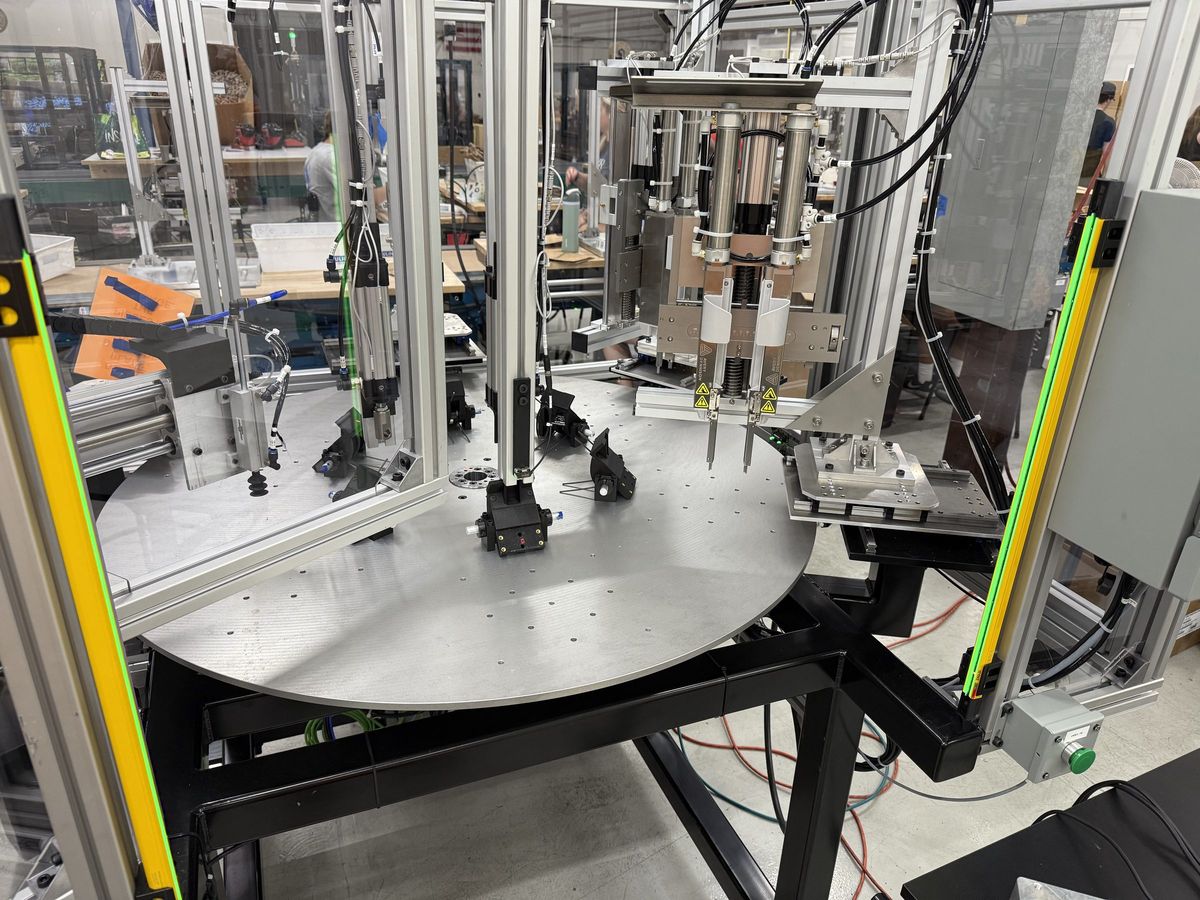
- Safeguarding design: light curtains, safety mats, guard-door interlocks and 3D area scanners
- Safety circuit and safety logic design, integrated with the machine controls
- Built to current industry safety practice, and to whatever your own plant specification adds on top of it
- Upgrading existing and legacy equipment that predates current safeguarding practice
- Guarding laid out so operators can still load, clear jams and service the cell
- The assessment delivered as a document — Excel or Word — alongside the as-builts, so it is on file when someone asks for it
Built to your specification
Safety requirements arrive two ways: the industry practice every machine has to meet, and whatever your own plant standard, EHS group or insurer adds on top. Both get designed in from the start and written down — not argued about at runoff.
The risk assessment
- Every foreseeable hazard on the machine listed, not only the obvious ones
- Each evaluated for severity, frequency and probability
- A required safety performance level determined for each hazard
- Guarding devices, circuits and logic selected to reach it
Your specification
- Current industry safety practice is the baseline, not the ceiling
- Plant-specific safety requirements designed in from the start rather than retrofitted
- Requirements from your EHS group, your insurer or your customer accommodated in the design
- If your specification calls out particular documents or a certifying body, it gets scoped at quote
What you get handed
- The completed risk assessment as a document — Excel or Word
- As-built drawings of what was installed and how it is meant to function
- A record that stays on file for audits, insurers and your own EHS group
The short version: tell us what your plant requires and it gets designed in, built and documented — and if you have no specification of your own, the assessment is what establishes one for the machine. Compliance is not a box ticked at the end here; it is the thing that decides where the guarding goes.
We work in your stack, not ours
What matters for this service. Bring us the brands already on your floor — if yours isn't here, ask.
| Category | Platforms |
|---|---|
| PLC / Controls | Allen BradleyAutomation DirectOmronSiemensSchneiderMitsubishiMaple Systems |
| In-house | CAD designCustom machine buildsPanel fabricationSafety & compliance |
Training behind this
- Dual Check Safety V7.50 & NewerFANUC's software-based safe speed and safe zone monitoring. It is what lets a cell be guarded without fencing off floor space you cannot spare, and it is a product competency rather than a standards claim.
Not sure it pencils out?
Tell us the part and the rate. We'll tell you straight whether it pays for itself — the honest answer is sometimes no.
The rest of the shop
Most jobs cross two or three of these. They're listed separately because that's how they get searched for, not because they get built separately.
Robot integration & programming
Take the bottleneck off the line
Vision systems & quality control
Catch the defect before it ships
Material handling systems
Move the product, not the people
Control panel fabrication
Built in the same shop that programs them
Robotic arc welding & weld fixtures
Every weld the same as the last one