


Shop open — Mon–Fri 08:00–17:00 Seneca Falls, NY(315) 719-5635
Speak to an engineer
Elastic stapling

Every part stapled the same way, on every shift

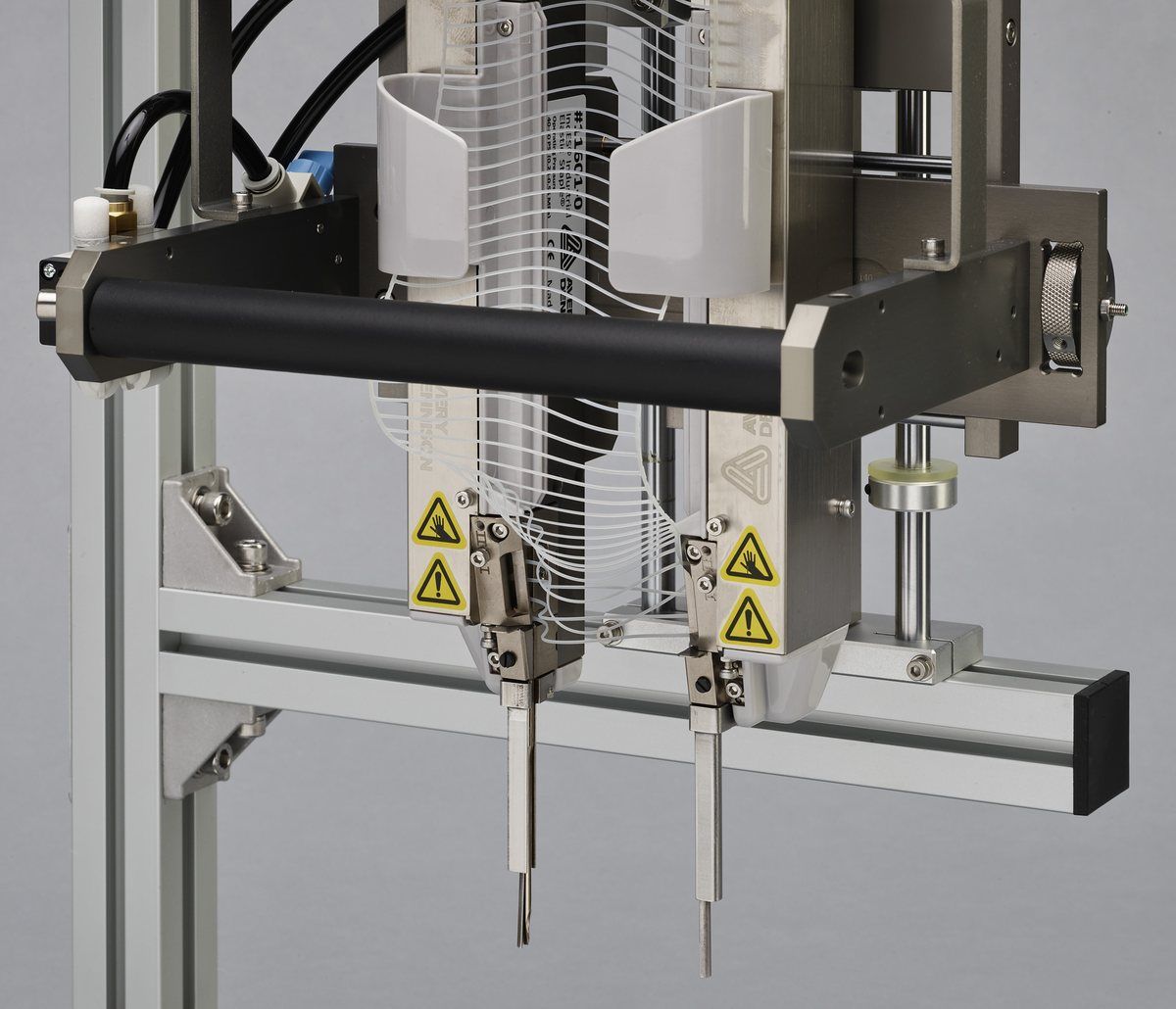
Hand stapling is a good process with one problem: the cycle time moves with whoever is running it. TMD has built two machines that take that variability out — one on a gantry, one on a rotary table — and would build a third around your part.

Trusted byFANUC Authorized System IntegratorUSFCR Verified VendorVention Automation PartnerSI Direct — Automation Direct
01 — What it fixes

Six problems, one machine

These are the reasons a plant automates a hand stapling operation. Most buyers arrive with one of them and leave having solved several.

  • The cycle time moves with whoever is running the line

    The machine applies every staple the same way on every part, so output stops depending on which operator is on shift and the rate becomes something the plant sets rather than discovers at the end of the day.

  • Quality is inspected in rather than built in

    Staple count, spacing and placement come from the recipe, not from judgment at the bench. The same part runs the same way in March and in November.

  • Changeover eats the schedule

    Product changes are recipe selections at the HMI instead of a rebuild at the bench, which is what makes a short run affordable rather than an expensive decision.

  • Unplanned downtime

    Purpose-built machines with maintained, standard components and controls TMD wrote and still supports — rather than a hand process that stops when the person running it does.

  • Repetitive strain on the operator

    Hand stapling is a squeeze-and-place motion repeated thousands of times a shift. Automating the motion takes the ergonomic exposure out of the job and leaves the operator loading and unloading.

  • Throughput is capped by hand speed

    More parts per shift from the same floor space and the same crew, because the constraint moves off the operator and onto the machine — where it can be measured and raised.

02 — Built

Two machines, same process

Both designed, built, wired and programmed in the TMD shop. Neither is a catalog machine adapted to the job — each was drawn around the part it runs.

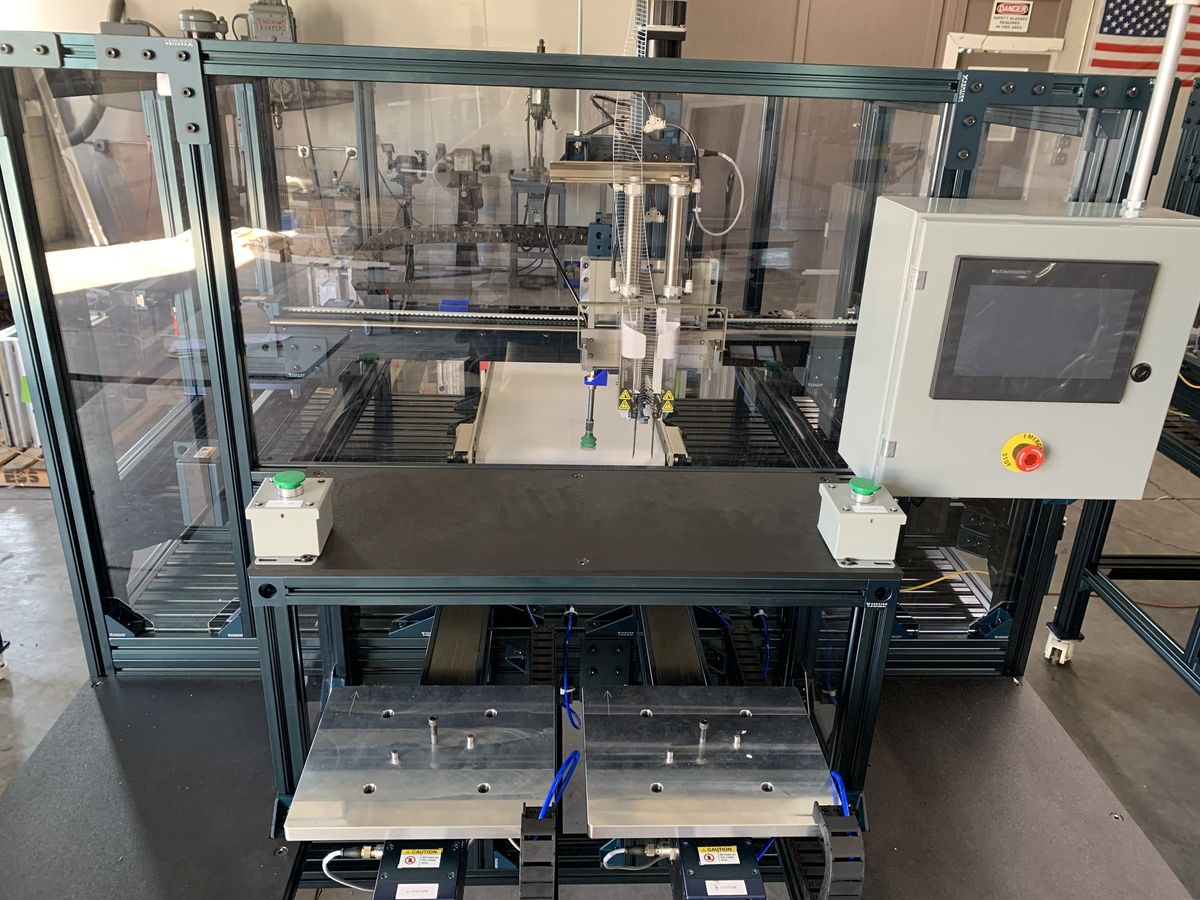
The 6-axis elastic stapling machine built by TMD on the shop floor — extruded aluminum frame, gantry-mounted stapler head, fixture plates at the infeed and an operator HMI.

Custom build — gantry-mounted stapler head

6-axis gantry machine

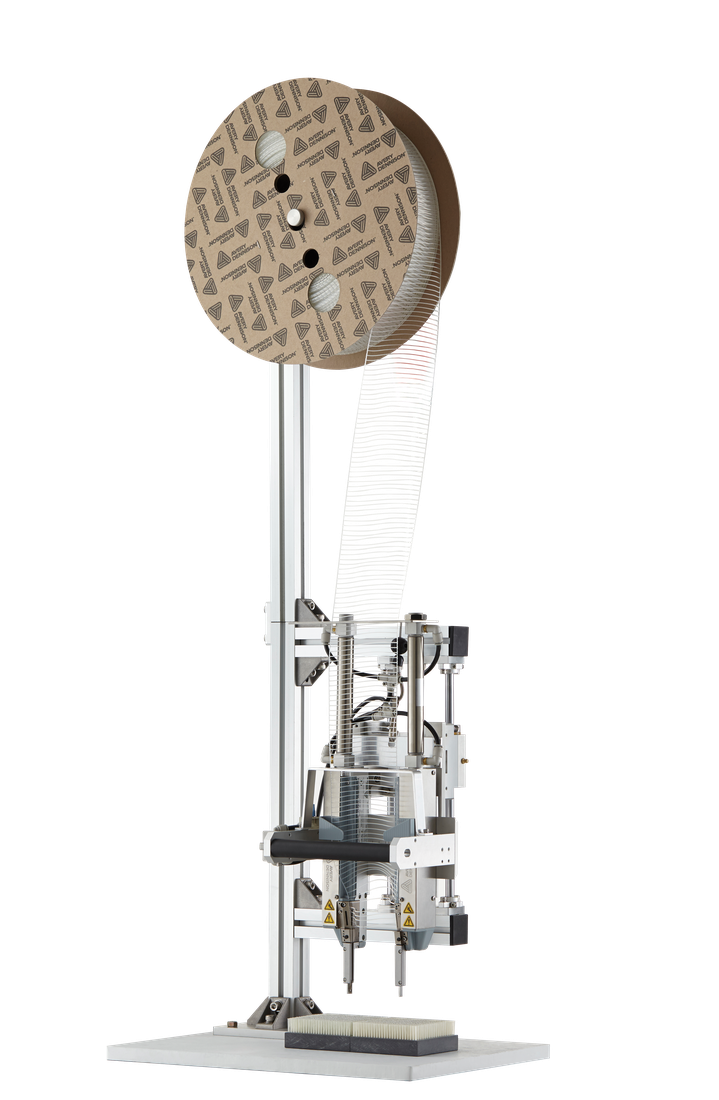
Built around the stapler head the operators were already using by hand, rather than around a machine the floor would have to adapt to.

Two indexing infeed stages present the work; a 4-axis XYZ gantry positions the head; pneumatic vacuum pickup and cylinder controls hold and place the part; an outfeed belt conveyor moves it on.

Recipes are taught from the HMI using setup screens TMD wrote for the job, so the same hardware runs any elastic stapling application — or straightforward pick-and-place, if the work changes.

The frame and motion hardware are Vention. The controls, the panel, the programming and the process study behind all of it are TMD.

Read the case study — 30 → 5 min changeover →
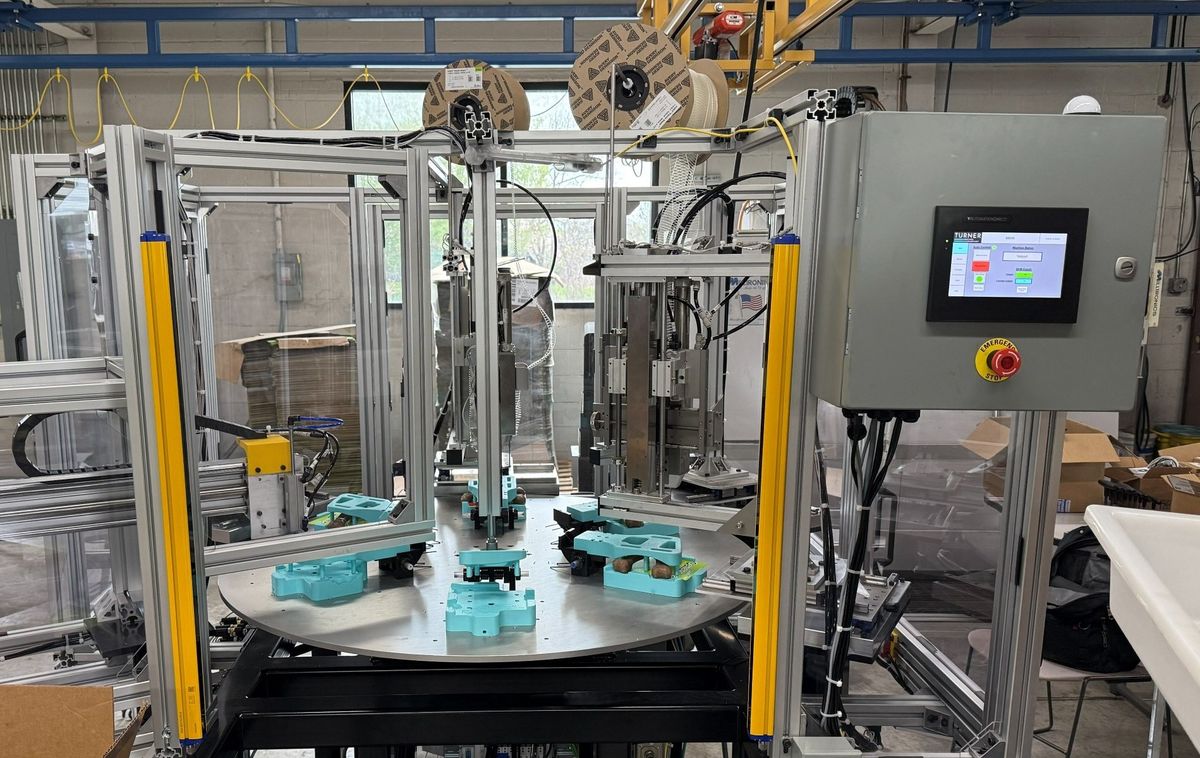
The rotary indexing elastic stapling machine built by TMD, with an aluminum extrusion frame, light-curtain guarding at the operator face and an HMI at the load station.

Custom build — rotary indexing table

Rotary indexing machine

A second machine for the same process on a different footprint — a rotary indexing table rather than a gantry, for work that suits station-to-station handling.

An indexing table moves the work between fixed stations, so loading, stapling and unloading happen at the same time on different parts instead of one after another.

Light-curtain guarding at the operator face and an aluminum extrusion frame, with the operator interface mounted at the load station.

Designed, built, wired and programmed in-house, and supported by the people who built it.

03 — Start here

Bring us the part

The first conversation is about whether automating it pays. If hand stapling is still the right answer for your volume, that is a fine answer and we will say so.

What to have ready

  • The part, or a drawing of it — and how many staples go in, and where
  • Parts per shift now, and the number you actually need
  • How many products run on the line, and how often it changes over
  • Whether the stapler head you use today should stay in the design

Where we build

The shop is in Seneca Castle, New York, and machines built there have been installed well beyond it — TMD has delivered work in Massachusetts, Pennsylvania, Ohio, Georgia and Colorado.

A machine ships. Distance matters for the install and the support call, not for whether we will take the job — so ask wherever you are.

Stapling by hand, and counting on the operator?

Tell us the part and the rate you need. We have built this machine twice and we will tell you honestly whether a third one pays.

Request an assessment